
7 Mistakes You're Making with Holiday Debt Recovery (And How to Fix Them Before Tax Season)
- Lynette Marshall

- Dec 30, 2025
- 6 min read
Listen up, squad. We're three days from 2026, and if you're sitting there pretending those holiday credit card statements don't exist, we need to have a real talk. January is coming whether you're ready or not, and tax season is right behind it.
The holidays hit different when you're trying to show love to your people, but now it's time to suit up and handle business. Because here's the real tea: how you handle this holiday debt recovery will determine whether tax season becomes your financial comeback story or another chapter of struggle.
I've been in these financial trenches long enough to know the moves that keep you stuck versus the ones that set you free. So let's break down the seven mistakes that are sabotaging your money mission, and exactly how to fix them before the IRS comes calling.
Mistake #1: Playing Hide and Seek with Your Debt Reality
The biggest mistake? Acting like those credit card statements are Voldemort, if you don't say their names, they can't hurt you. Wrong move, beloved.
You cannot fight what you cannot see. And right now, too many of y'all are walking around with financial blindfolds on, hoping the damage will somehow fix itself. That's not how money works, and that's definitely not how interest works.
Your mission: Before we flip this calendar to 2026, you need to gather every single statement, receipt, and notification from your holiday spending spree. Every gift, every dinner out, every "just this once" purchase, every shipping fee. All of it.
Create a master list with three columns: What you bought, how much it cost, and which card it went on. No judgment, just facts. Knowledge is armor in this financial fight, and you can't suit up without knowing exactly what you're up against.

Mistake #2: Letting Interest Turn Your Debt into a Monster
Here's where people get caught slipping: they think that $2,000 in holiday debt is just $2,000. Baby, no. With credit card interest rates sitting pretty at 20-30%, that debt is growing every single day you let it breathe.
Compound interest is like that friend who eats all your food, it takes more than you think, and it never stops coming back for seconds. Every month you carry that balance, you're feeding the beast.
Your mission: Stop feeding the interest monster. Even if you can only throw an extra $25 at your highest-rate card, do it. That $25 might seem small, but it's cutting off the interest growth at its knees. Attack that high-interest debt like your financial freedom depends on it, because it does.
Mistake #3: Minimum Payments Are Maximum Traps
Let me tell you something that credit card companies don't want you to know: minimum payments are designed to keep you broke. Those little $35 payments? They barely cover the interest, which means you're basically paying rent on your own money without ever actually owning the house.
I see families making minimum payments for YEARS on holiday debt, thinking they're being responsible. Meanwhile, that $1,500 Christmas splurge turns into $3,000 of payments over five years. That math doesn't math, and we're not about to let that happen to you.
Your mission: Find that extra money somewhere. Cut the streaming services you don't use. Skip the daily coffee run. Sell something. Do whatever it takes to pay more than minimum. The debt snowball method works, pick your smallest balance and attack it with everything you've got while paying minimums on the rest. Once that's gone, roll that payment to the next smallest debt. Momentum builds momentum.
Mistake #4: Ignoring What This Does to Your Credit Score
Your credit score isn't just some random number, it's your financial reputation walking around town, telling everybody whether you're trustworthy with money or not. And honey, holiday debt can mess up your reputation real quick.
High balances relative to your credit limits tank your score. Late payments? They'll haunt your credit report like bad decisions at a high school reunion, for seven whole years. And a damaged credit score means you'll pay more for everything: car loans, mortgages, even insurance.
Your mission: Set up automatic minimum payments right now. Not tomorrow, not next week, today. Your future self will thank you when you're not explaining late payments to a mortgage lender. And work on getting those balances below 30% of your credit limits. Your score will start recovering faster than you think.
Mistake #5: Falling for the "Free Money" Trap
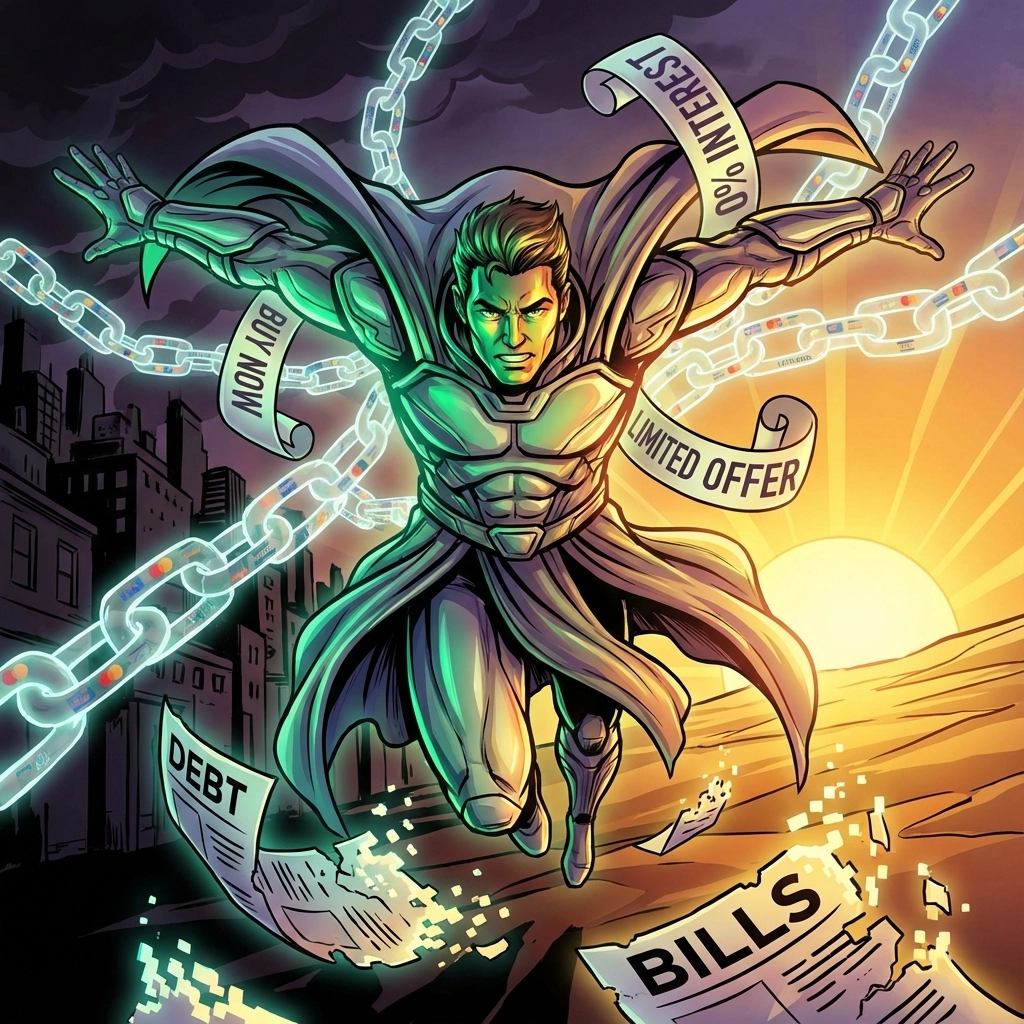
Oh, the number of people who got seduced by those "0% interest for 12 months" offers during holiday shopping! Let me break this down for you: most of those offers aren't what they seem.
That "deferred interest" fine print is a killer. Miss that payoff date by even one day, and they'll slap you with ALL the interest that would have accumulated from day one. It's like they've been keeping a tab the whole time, just waiting for you to slip up.
And don't get me started on buy-now-pay-later apps. They make spending feel painless until you've got four different payment schedules overlapping, and suddenly you're juggling due dates like you're in Cirque du Soleil.
Your mission: If you're already trapped in these schemes, set up automatic payments to clear them BEFORE the promotional period ends. If you haven't fallen for them yet, don't start. Cash is king, and payment plans are for people who want to stay broke.
Mistake #6: Shopping Without a Money Map
Here's a hard truth: most holiday overspending happens because people don't shop with a plan, they shop with feelings. You see your niece's face light up at that expensive toy, or you remember how your mama used to go all out for the holidays, and suddenly you're emotional spending your way into January financial stress.
Shopping without a cash-first plan is like driving cross-country without GPS. You might get somewhere, but it probably won't be where you intended, and you'll definitely spend more gas money than you planned.
Your mission: For next year (yes, we're already planning), create your holiday budget based on actual money in your account, not money you hope to have. Divide it into categories: gifts, food, travel, extras. And here's the kicker: don't spend money that hasn't hit your account yet. Pre-spending on credit is a setup for failure.
Mistake #7: Staying in the Spending Mindset
This is where people sabotage their own recovery mission. They'll work hard to pay down that holiday debt, then turn around and keep spending because they haven't addressed the root problem: they're still living in consumer mode instead of recovery mode.
Those retail emails hitting your inbox? They're not your friend right now. That Instagram ad for the perfect post-holiday sale? It's a trap. Your favorite store sending you a "New Year, New You" discount? Delete it.
Your mission: Unsubscribe from every retail email. Unfollow shopping accounts on social media. Avoid the mall, Target, and anywhere else that triggers your spending reflexes. Tell your friends and family you're on a spending detox: real ones will support your mission.
Consider doing a no-spend challenge for January and February. Every dollar you don't spend on unnecessary stuff is a dollar that goes toward eliminating that holiday debt.
The Credit Avengers Connection: Turn Tax Season Into Your Comeback Story
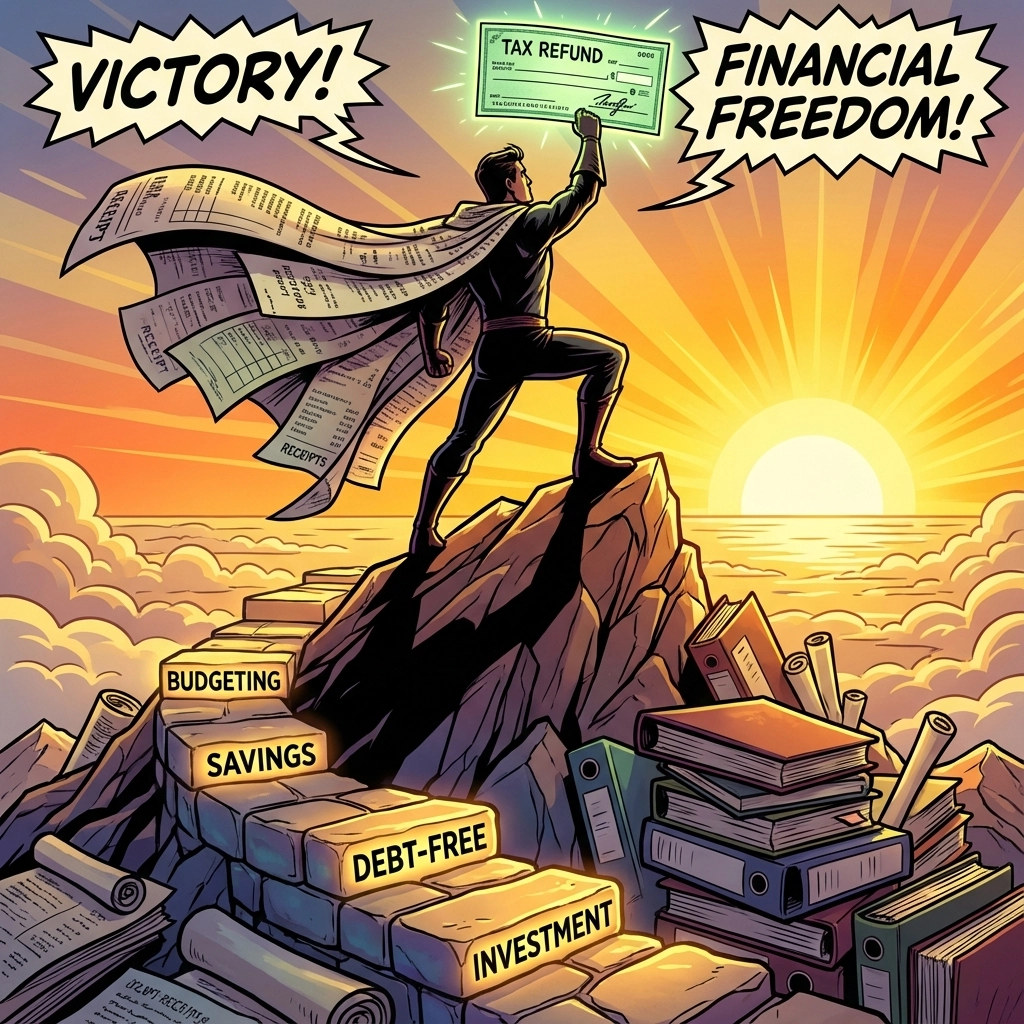
Here's where everything comes together, squad. Tax season is about to be your financial superhero origin story, but only if you handle this holiday debt recovery right.
When you clean up your money situation now, you set yourself up to use that tax refund strategically. Instead of blowing it on more stuff, you can use it to eliminate debt completely, build your emergency fund, or invest in your financial future.
At Credit Avengers, we see this transformation happen every single year. People come to us stressed about their finances, and we help them turn tax season into a money move that changes their whole trajectory.
Our Money Mastery program isn't just about filing taxes: it's about building the financial literacy and habits that keep you winning long after tax season ends. Because everybody eats when everybody has the knowledge and tools to make smart money moves.
Your Post-Holiday Debt Recovery Action Plan
Today: Gather all your holiday spending statements and create your debt reality check list
This week: Set up automatic minimum payments on all cards to protect your credit score
January: Launch your debt attack plan, starting with either your smallest balance (snowball) or highest interest rate (avalanche)
February: Complete your spending detox and redirect that money to debt elimination
March: Use your tax refund strategically to accelerate your debt payoff
The clock is ticking on 2025, but 2026 can be your year of financial freedom if you make the right moves now. Holiday debt doesn't have to define your financial story: it can be the challenge that finally motivates you to take control of your money once and for all.
Remember, squad: we rise together. Your financial comeback isn't just about you: it's about showing your family, your community, and everyone watching that it's possible to turn financial struggles into financial strength.
Ready to suit up and handle business? Let's make 2026 the year your money story changes forever. The mission starts now.
Comments